
North American Free Trade Agreement
Trilateral trade bloc among Canada, Mexico, and the United States.

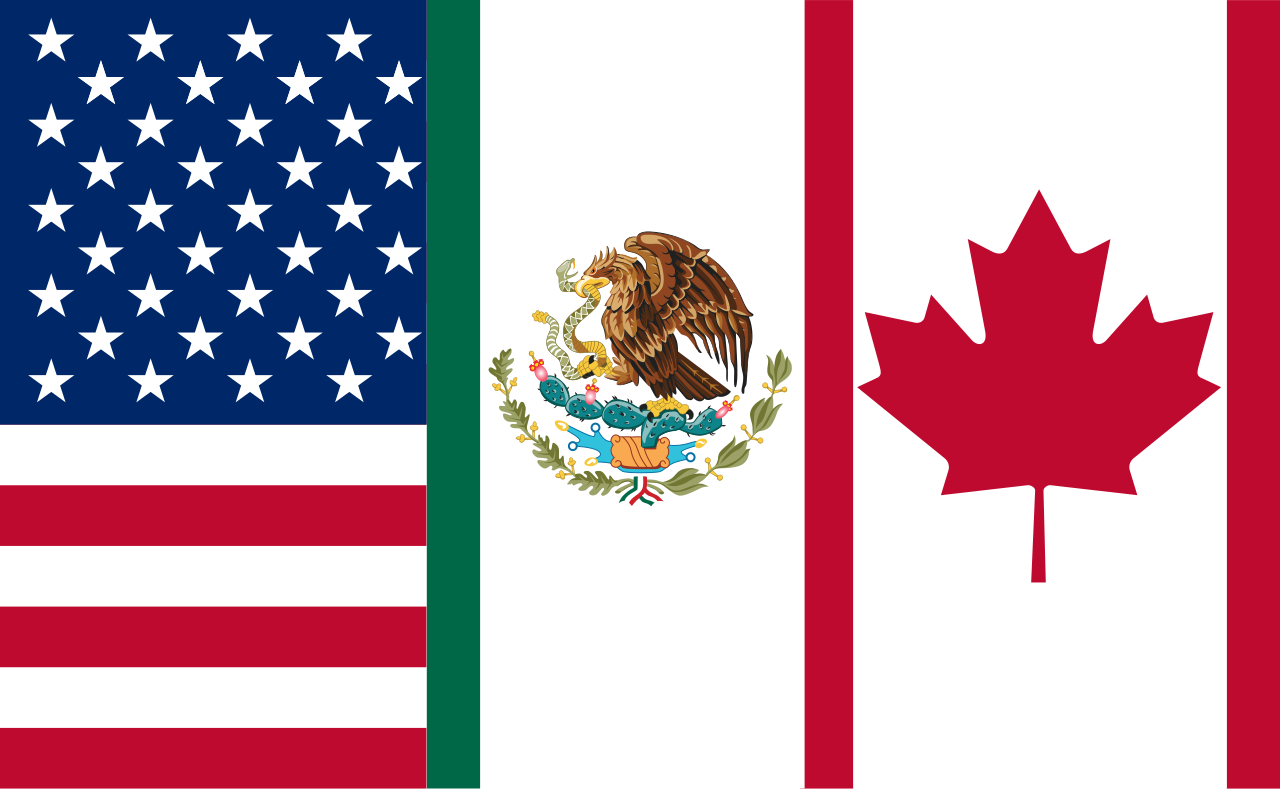
Heraldry · CC BY-SA 3.0
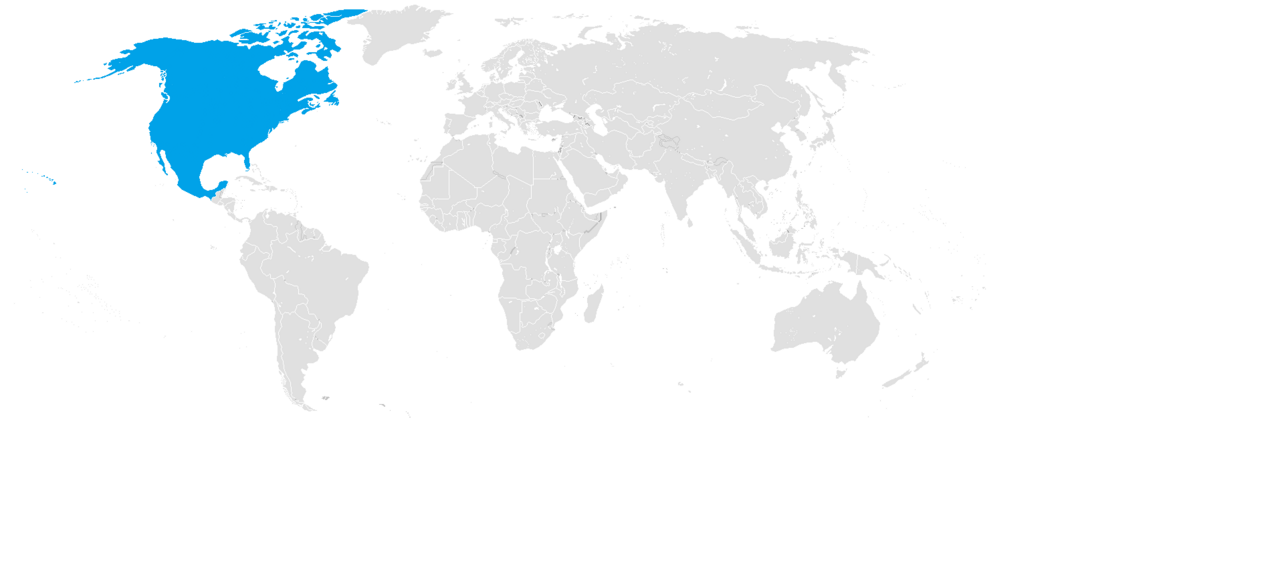
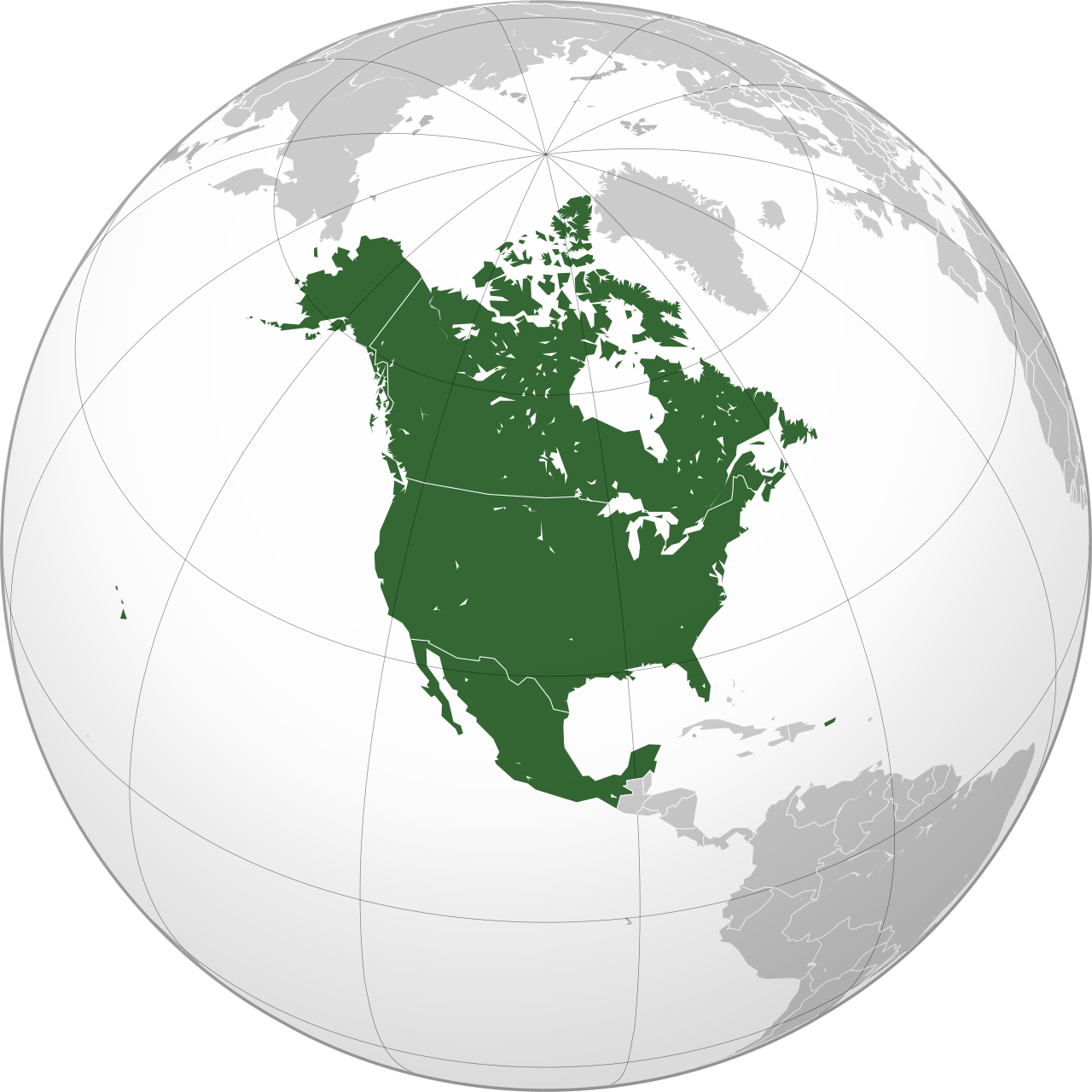
The North American Free Trade Agreement (NAFTA) was a trilateral trade agreement signed by Canada, Mexico, and the United States that created a trade bloc in North America.
- Full Name
- North American Free Trade Agreement
- Also Known As
- NAFTA, TLCAN, ALÉNA
- Replaced By
- United States–Mexico–Canada Agreement (USMCA) on July 1, 2020
- Parties
- Canada, Mexico, United States
- Key Negotiators
- George H. W. Bush, Carlos Salinas de Gortari, Brian Mulroney
Lore & Background
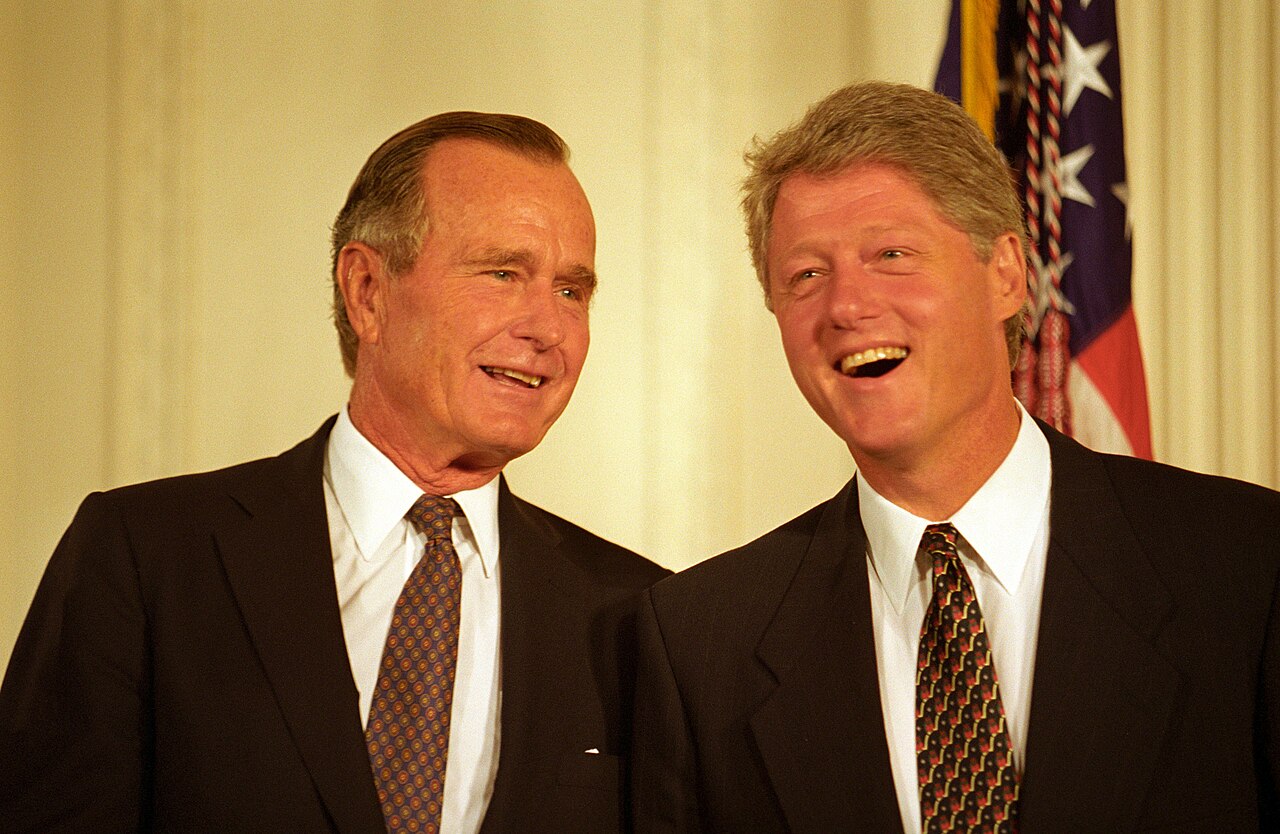
The impetus for a North American free trade zone began with U.S. president George H. W. Bush, Mexican president Carlos Salinas de Gortari, and Canadian prime minister Brian Mulroney agreed to negotiate what became NAFTA.
Reader's Guide
NAFTA eliminated or reduced barriers to trade and investment between the three countries. Its effects on employment, the environment, and economic growth have been politically disputed. Most economic analyses indicated that NAFTA was beneficial to the North American economies and the average citizen, but harmed a small minority of workers in industries exposed to trade competition. Economists held that withdrawing from NAFTA or renegotiating it to reestablish trade barriers would have adversely affected the U.S. economy and cost jobs, and that Mexico would have been much more severely affected by job loss and reduction of economic growth. After U.S.
Did You Know?
- NAFTA was colloquially referred to in the Anglosphere as NAFTA (NAF-tə).
- Passage of NAFTA resulted in the elimination or reduction of barriers to trade and investment between the United States, Canada, and Mexico.
- The USMCA took effect on July 1, 2020, replacing NAFTA.
From Campaign Promise to Trilateral Vision
The seed of what would become NAFTA was planted long before any formal negotiations began. In November 1979, Ronald Reagan announced his presidential candidacy and wove the concept of a North American free trade zone into his 1980 campaign platform, setting an ideological direction that would persist across administrations. The first concrete step came in 1988, when Canada and the United States signed their bilateral free trade agreement. That same year, Mexican president Carlos Salinas de Gortari, looking to attract foreign investment in the aftermath of the Latin American debt crisis, reached out to President George H. W. Bush to propose a similar bilateral arrangement. Canadian Prime Minister Brian Mulroney, alarmed that the gains his country had secured through the 1988 pact could be diluted by a separate U.S.–Mexico deal, pressed to be included in the talks. What began as a potential two-nation arrangement thus expanded into a three-way negotiation. Diplomatic discussions stretched from 1990 onward, and on December 17, 1992, the leaders of all three nations signed the final text in their respective capitals, transforming a campaign slogan into a binding multilateral framework.
A Divisive Ratification Fight
The path from signature to law was anything but smooth. In Canada, the earlier 1988 free trade pact had already split the electorate; in that election, more citizens voted for parties opposing free trade, yet the division between the Liberals and New Democrats allowed the pro-trade Progressive Conservatives to win the most seats. Prime Minister Mulroney's parliamentary majority let him push the NAFTA bill through with relative ease, but his successor Kim Campbell saw the party crushed in the 1993 election by Jean Chrétien's Liberals, who had campaigned on a pledge to renegotiate or scrap the deal entirely. In the United States, President Bill Clinton attached two supplemental accords—the North American Agreement on Labor Cooperation and the North American Agreement on Environmental Cooperation—to soften the agreement's harshest criticisms. The House voted 234 to 200 on November 17, 1993, with 132 Republicans and 102 Democrats in favor, while the Senate approved it 61 to 38 three days later. Representative David Dreier of California emerged as a key Republican champion, whereas Illinois Congressman Luis Gutiérrez became one of the most visible opponents, objecting that the text did not adequately address displaced-worker retraining, American job-loss protections, or collective-bargaining rights for Mexican laborers.
Economic Gains, Uneven Costs
Once in force on January 1, 1994, NAFTA dismantled or reduced the tariff and regulatory barriers that had long separated the economies of the United States, Canada, and Mexico, creating what quickly became one of the world's largest trade blocs measured by gross domestic product. The agreement's consequences, however, ignited decades of political argument over employment, environmental standards, and overall economic growth. The weight of economic research suggested a broadly positive picture: the average citizen across the three countries benefited, and the North American economies as a whole grew stronger. Yet that aggregate gain masked a sharper reality for a small minority of workers employed in sectors suddenly exposed to cross-border competition, who faced job losses and wage pressure. Economists consistently warned that pulling out of the pact or renegotiating it to reinstate trade barriers would damage the U.S. economy and eliminate jobs. The asymmetry of risk was stark: Mexico, with its smaller and more trade-dependent economy, would have suffered far more severe job losses and a deeper contraction in growth, both in the immediate aftermath and over the longer term, had the agreement been unwound.
The USMCA Succession
NAFTA's era as the governing trade framework came to an end not through a single dramatic rupture but through a deliberate, if politically charged, replacement. After Donald Trump assumed the U.S. presidency in January 2017, he moved to renegotiate the agreement, opening fresh talks with both Canada and Mexico. The process culminated in September 2018, when the three governments announced they had reached a deal to supplant NAFTA with the United States–Mexico–Canada Agreement, commonly abbreviated USMCA. Ratification in each country's legislature followed over the next eighteen months, with all three parliaments and congresses having approved the new text by March 2020. NAFTA continued to govern trade relations during this transitional window, ensuring no gap in coverage. In April 2020, Canada and Mexico formally notified Washington that their domestic preparations were complete and they stood ready to activate the new regime. The USMCA officially entered into force on July 1, 2020, at which point NAFTA ceased to apply, closing a chapter that had shaped North American commerce for more than a quarter of a century.
Gallery

Frequently Asked Questions
What is the North American Free Trade Agreement (NAFTA)?
NAFTA was a trilateral trade pact that wove the economies of Canada, Mexico, and the United States into a single free-trade zone. By stripping away most tariffs and regulatory barriers among the three nations, it created one of the largest trade blocs in the world when measured by combined GDP.
Which countries were parties to NAFTA?
The United States, Canada, and Mexico were the three signatories. Together they formed a trilateral bloc that removed most customs duties and cross-border trade obstacles among their territories.
What replaced NAFTA and when did the transition happen?
NAFTA was succeeded by the United States–Mexico–Canada Agreement (USMCA), which took effect on July 1, 2020. The successor deal modernized provisions around digital trade, labor standards, and rules of origin while keeping the core free-trade architecture intact.
Why is NAFTA considered a landmark in economics and business?
It showed that three nations with very different income levels and industrial bases could build a large, rules-based trading zone that reshaped continental supply chains. Its creation, operation, and eventual replacement remain a go-to case study for how trade policy adapts to shifting political and industrial priorities.
More in Economics And Business 1-17
Spotted an error? Know more?
This is a living reference — every entry is fact-audited, and reader corrections feed straight into our audit queue. Suggest an edit · See this site's audit record